Korean Popular Culture in the Classroom: When Students Know More Than the Syllabus
Korean popular culture has become an academic object faster than the academy was ready for it. From BTS to Squid Game, the seminar room is now grappling with texts that students know better than their professors do.
For Korean academics in particular, this creates a curious double bind. On the one hand, Hallyu offers an unprecedented opportunity to place Korean studies at the center of global debates on media, culture, and power. On the other, the speed and scale of global fandom outpace conventional academic rhythms. Grant cycles, peer-reviewed publications, and curriculum reforms move slowly; YouTube algorithms, TikTok trends, and fandom discourse do not.
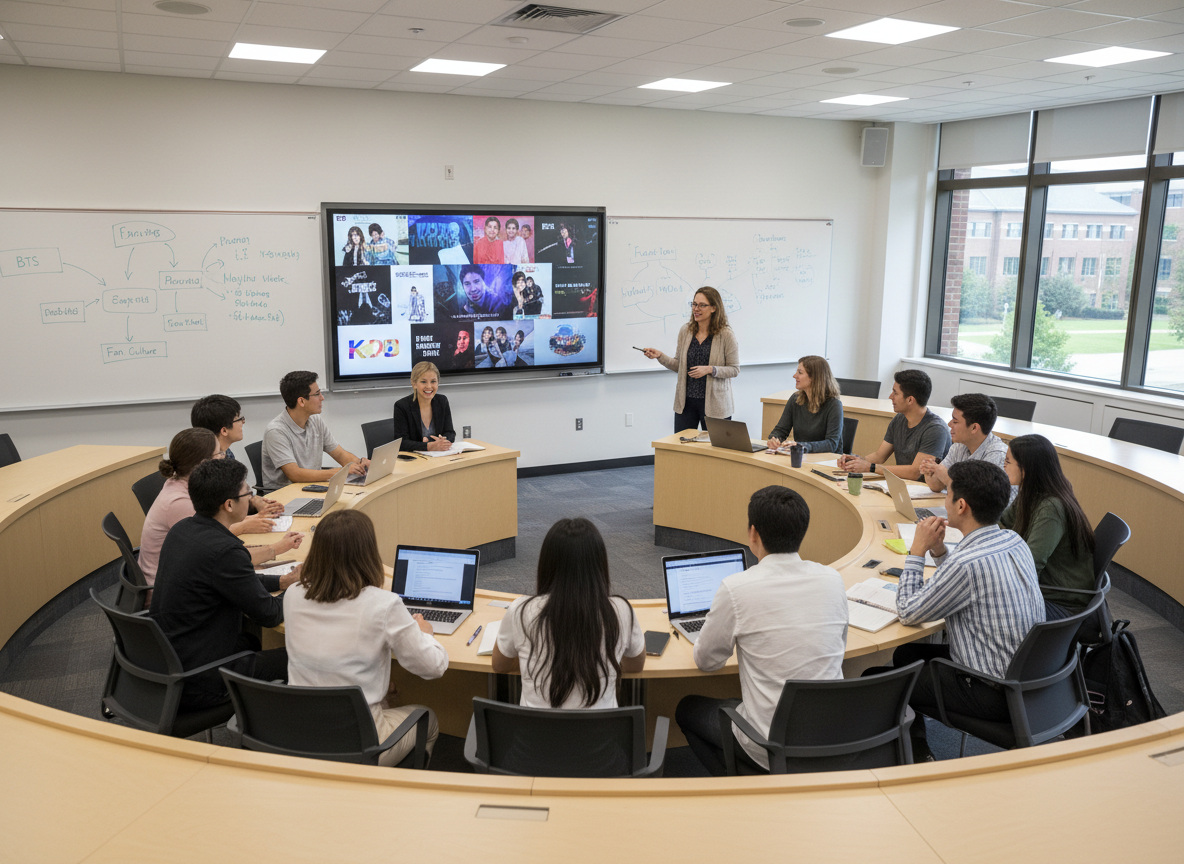
This shift unsettles traditional classroom hierarchies. In my seminars at Yonsei University, international exchange students and Korean undergraduates routinely offer granular insights into fan translation norms, streaming strategies, and online mobilization that far exceed any published scholarship. The challenge is not to reclaim authority by policing these experiences, but to reframe them as empirical data.
Yet the academic legitimacy of studying Hallyu is still contested, both inside and outside Korea. Within media studies, some colleagues quietly worry that dedicating a course to K‑dramas or K‑pop risks trivializing a curriculum historically oriented toward European cinema, American television, or classical critical theory.
The global dissemination of Korean cultural products complicates this picture further. When a Netflix series like Squid Game becomes a worldwide phenomenon, it no longer belongs straightforwardly to any single national canon. Courses on Korean media must therefore negotiate multiple audiences: Korean students for whom these texts are embedded in everyday life; international students for whom they are points of entry into Korean society.
None of this means abandoning critical distance in favor of celebration. If anything, the global enthusiasm for Korean popular culture demands more, not less, rigorous scrutiny.
Author: Min-jung Lee, Professor of Media Studies, Yonsei University
 <strong>Korean Professionals International</strong>
Leave a comment