Credit, Conflict, and Collaboration: Rethinking Research Policy for Korean Scientists Abroad
When a breakthrough spans three countries and four institutions, the question of credit becomes both a legal and a moral one. Korean researchers navigating international collaborations often find that the norms they learned at home do not travel well.
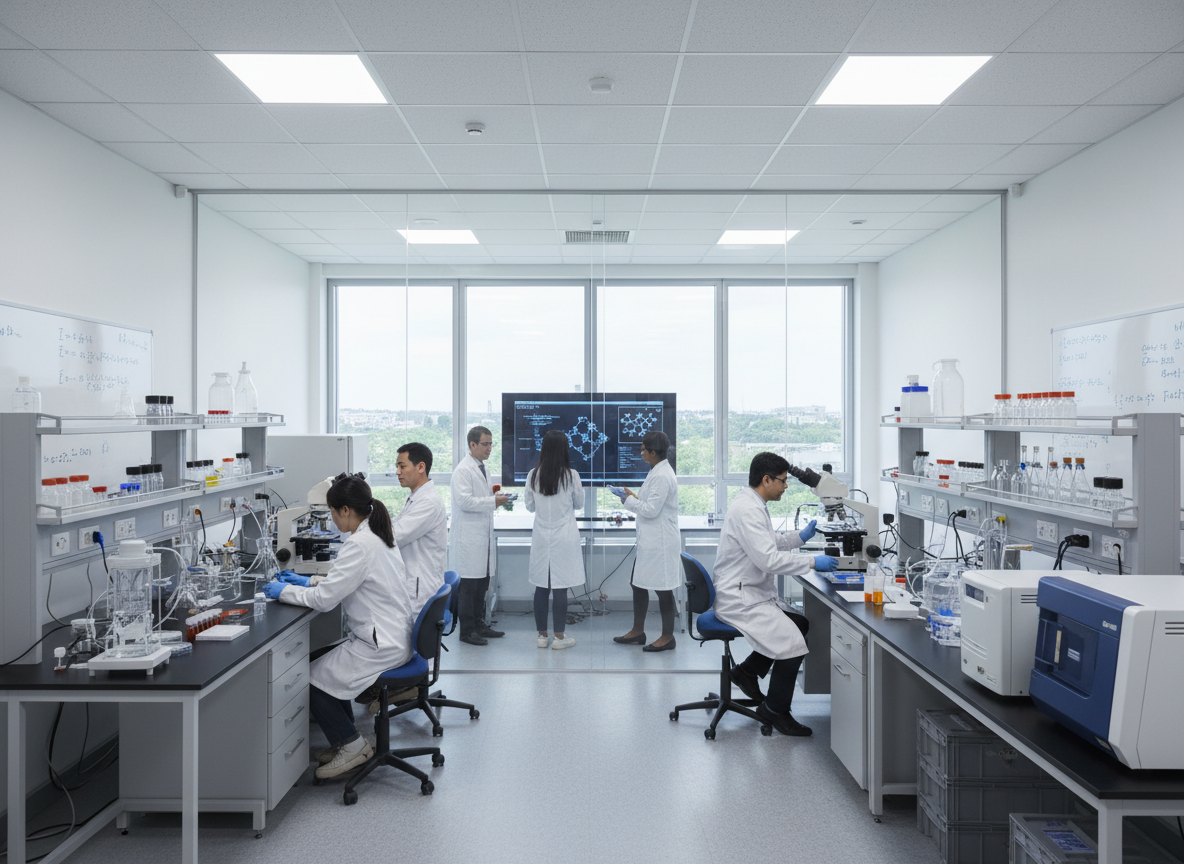
Disputes over intellectual property are no longer confined to rare, high-stakes cases; they increasingly define the everyday reality of cross-border research. Korea’s universities and government-funded research institutes have invested heavily in international partnerships, particularly in fields such as bioengineering, artificial intelligence, and semiconductor technology. Yet institutional policies on invention disclosure, patent ownership, and technology transfer often presume a domestic context.
Authorship conventions in scholarly publications mirror these tensions. Many Korean academics were socialized in systems where seniority weighs heavily in the order of authors, and where the corresponding author role is often equated with institutional authority rather than direct intellectual leadership. In contrast, leading North American and European journals increasingly demand transparent contribution statements and discourage honorary authorship.
Korean institutions thus face a strategic question: will they remain rule-takers, adapting case by case to foreign partners’ templates, or will they help shape emerging global standards? The answer matters not only for prestige but for talent retention.
Several policy directions deserve serious consideration. First, Korean funding agencies and universities should develop model international collaboration agreements that explicitly address joint IP ownership, data governance, and dispute resolution. Second, promotion and evaluation systems must reward adherence to best-practice authorship standards. Third, research integrity education in Korea should include systematic training on comparative IP regimes and authorship norms.
Ultimately, Korea’s role in global science will be defined less by single landmark discoveries than by the quality of the rules that govern everyday collaboration.
 <strong>Korean Professionals International</strong>
Leave a comment