Summary: China’s netizens are cheering for the US President Donald Trump, apparently, out of contempt for America. They call Trump Chuan Jianguo (川建國), translated as ‘Trump the Nation Builder,’ meaning Trump is making China stronger by undermining America. They seem to believe that China is the only country powerful enough to checkmate the Trumpian attempt to make the world a strange and dangerous place to live in, and that neither the European Union, Canada, Mexico, Russia nor any other country are strong enough to convince Trump to stop what he is doing to the world. But China’s obsession with its territorial fundamentalism is worrisome to its smaller neighbors. China would do whatever it could to become the ruler of East Asia and the Pacific’s western half as the second-best outcome in its dream of becoming a global superpower. How would the smaller neighbors effectually cope with China’s imperialistic impulses? It behooves the leaders of the smaller countries to study the Taft-Katsura Agreement of 1905. Under this secret agreement, the US consented to Japan’s colonization of Korea, and, as quid pro quo, Japan assented to America’s acquisition of the Philippines as its colony. There is no reason why such treacherous geopolitical deals will not be forced upon smaller countries in East Asia or other regions in the 21st century, say, by a Trump’s America, a Xi’s China, or a Putin’s Russia. It is incumbent upon the educators in such countries to educate their young generations to cultivate strong backbones, i.e., self-respect for themselves and their nation. Self-respecting people and nations would not tolerate any monkey business imposed by other nations even if the latter were the so-called superpower or superpower wannabe.
Keywords: autocracy; crooked writing of history; Legalist; rule-by-law (依法治国)
Summary in 한글: 중국 네티즌(netizens)들은 미국에 대한 경멸감 때문에, 도널드 트럼프 미국 대통령을 응원하고 있습니다. 그들은 트럼프를 ‘국가 건설자(nation builder)’라는 뜻의 ‘촨젠궈(川建國)’라고 부르는데, 이 말은 트럼프가 미국을 약화시킴으로써 결과적으로 중국을 더 강하게 만들고 있다는 의미를 담고 있습니다. 그들은 세상을 기이하고 위험한 곳으로 만들려는 트럼프의 시도를 저지할 수 있는 유일한 나라가 중국뿐이며, 유럽연합(EU), 멕시코, 캐나다, 러시아 등 그 어떤 나라도 트럼프가 세계를 상대로 벌리는 행태를 멈추게 할 만큼 강력하지 않다고 믿는 듯합니다. 그러나 영토 문제에 대한 중국의 근본주의적 집착은 주변 소국들에게 우려를
안겨줍니다. 중국은 세계 초강대국이 되겠다는 꿈을 이루기 위한 차선책으로, 동아시아와 태평양 서부 지역의 지배자가 되기 위해, 가능한 수단과 방법을 동원할 것입니다. 그렇다면 주변 소국들은 중국의 이러한 제국주의적 야욕에 어떻게 효과적으로 대처할 수 있을까요? 소국들의 지도자들은 1905년에 체결된 ‘태프트-가쓰라 밀약’을 연구해 볼 필요가 있습니다. 이 비밀 협정에서 미국은 일본의 한국 식민지화를 용인했고, 그 대가로 일본은 미국의 필리핀 식민지 지배를 인정했습니다. 21세기에 들어서도 트럼프의 미국, 시진핑의 중국, 혹은 푸틴의 러시아 등에 의해 동아시아나 다른 지역의 소국들에게 이와 같은 배신적이고 기만적인 지정학적 거래가 강요되지 않으리라는 보장은 없습니다. 한국을 위시한, 중국 주변 나라들의 교육자들에게는, 젊은 세대가 강인한 기개, 즉 자신과 자신의 나라에 대한 자긍심을 함양하도록 가르쳐야 할 의무가 있습니다. 스스로를 존중할 줄 아는 시민과 나라는, 상대가 소위 초강대국이든 혹은 초강대국을 되고자 하는 나라이든 간에 그들이 가하려는 그 어떤 부당한 처사도 용납하지 않을 것입니다.
[핵심어: 독재; 역사 왜곡; 법가(Legalist); 법에 의한 통치(rule-by-law)]
Table of Contents:
I. Introduction
II. What does China’s typical allegation regarding history hide?
III. If the state controls society, the system is called totalitarian
IV. Bastardization of Confucianism for Legalists’ rule by law
V. Today’s politics is not detached from the tradition established by Qin Shi Huang
秦始皇
VI. The June 4, 1989, Tiananmen Square massacre
VII. Western capitalists hardly know the way to walk down the China mountain
VIII. Today’s rulers of China do not know the etymology of ‘civilization’
IX. Does quantity change quality?
X. Implications for smaller neighbors of China
XI. Concluding remarks
Author’s biographical information
I. Introduction
According to some recent visitors from China, many Chinese netizens enjoy watching how the 47 th US President Donald Trump is messing up the world in the name of the MAGA (Make America Great Again) slogan. It is not surprising that many of them cheer for Mr. Trump for his misguided actions that may lead to a civil war dangerous enough to dissolve the American nation. China’s nationalists are cheering for Mr. Trump out of contempt for America. They call Trump Chuan Jianguo (川建国), translated as ‘Trump the Nation Builder’ — meaning Trump is making China stronger by undermining America.
Numerous Chinese citizens seem to believe that China is the only country powerful enough to checkmate the Trumpian attempt to make the world a strange and dangerous place to live in. They apparently suppose that neither the European Union, Canada, Mexico, Russia, nor any other country is strong enough to convince Trump to stop what he is doing to the world. The current essay examines China’s history, especially political history, with the spirit of Straight Writing of History (春秋直筆 or 春秋筆法) advocated by Confucius (551 – 479 BCE), or with the mind of Geoffrey Chaucer (1342-1400), who famously said: “Truth is the highest thing that men may keep.”
II. What does China’s typical allegation regarding history hide?
According to a well-known allegation propagated by the mainland Chinese establishment and inculcated into the brains of young men and women in China: “China is a civilizational state, arguably the world’s only one since it is the only country in the world with a history of unified statehood for over 2,000 years. It is also the world’s only civilization to last continuously for over 5,000 years, now coalesced into a huge modern nation. Any such country is bound to be unique. China today is an amalgam of four factors, namely, a super-large population, a super-sized territory, super-long traditions, and a super-rich culture.” (See “How China Made It: The political philosophy behind the world’s most remarkable success story,” Being Review, March 22, 2018.) The first message given by the Beijing Review article above is that China is a big civilizational state with more than five thousand years of honorable history of a super-rich culture. Is it? Is the message congruent with China’s actual (not erased or rewritten) history and civilization? Let me start with the ancient history of China from three thousand years ago, the history of the Shang (商) Dynasty, of which the Chinese people seem proud. According to the South China Morning Post (April 23, 2023), a book written about Chinese history 3,000 years ago has become an unlikely bestseller in Hong Kong. In Revelation, or Jian Shang (翦商) in Mandarin, historian Li Shuo concluded, through the study of oracle bone scripts and archaeological discoveries, that the Shang (商) Dynasty in the early Bronze Age had embraced brutal cannibalism and human sacrifices. [Note: Jiǎn Shāng (翦商) means “cutting with scissors,” often referring to the clip, trimming, killing, annihilating, wiping out, or removing.] The book describes how that part of the country’s dark history was “rewritten” by the succeeding Zhou (周) Dynasty, which overthrew Shang in 1,046 BCE. Isn’t it an early case of 春秋曲筆 (춘추곡필), or crooked writing of history? I was surprised when I read the South China Morning Post (SCMP) article because the article that raises disturbing political issues or questions was published in Hong Kong, which is now entirely under the control of the Chinese Communist Party (CCP). I also wonder if the article’s publication may reflect a slip of censorship.
According to the book Jian Shang, as reported by the SCMP, the Shang rulers believed in day-to-day intervention by gods in human life and offered human flesh to heaven – humans were tortured and slaughtered to “celebrate” occasions such as building a new house or commemorating a deceased noble. The way of life and ideology employed in the Shang Dynasty was “covered up” by the Zhou Dynasty, which was admired by Confucius, who is, in turn, revered as the First Sage by the Chinese and used by the CCP as a mask for its propaganda. One thing is clear: Historian Li’s book is eye-opening in many ways as it sheds new light on the roots of Chinese culture, and the nature of civilization President Xi has touted in many speeches. [For a detailed discussion of the SCMP article, see Revelation: Scythians and Shang on https://languagelog.ldc.upenn.edu/nll?p=58846, June 4, 2023.]
If one moves about a millennium forward, one can smell the nature of the culture and civilization of the Qin(秦) Dynasty. Qin Shi Huang (秦始皇) was the first emperor of a unified China from 246 to 220 BCE. He is infamous worldwide for initiating the building of the Great Wall and burning books. He also had hundreds of scholars buried alive because they were critical of his iron-fisted rule. Qin Shi Huang’s tomb in Xi’an also reveals the nature of Chinese culture and civilization. In addition to the vast Terracotta Army buried with Emperor Qin Shi Huang, more than six hundred tombs of slaves, servants, laborers, concubines, and scholars buried alive with the emperor have been discovered. Furthermore, it is estimated that as many as 400,000 people died during Qin Shi Huang’s Great Wall construction. Many of these workers were buried under the Wall itself. All these loudly display the essential aspects of China’s ancient culture and civilization.
At the time of the Qin秦 Dynasty, another empire (in the West) was the Roman Empire. While the Chinese constructed the Great Wall, the Romans built 150,000 kilometers (93,000 miles) of highways throughout their empire. This web of highways (each designed as a four-meter-wide paved road for vehicles sandwiched by 3-meter-wide pedestrian sidewalks) reached even Britannia (today’s Britain), then the most underdeveloped region in the empire. Roman soldiers — superb engineers and well-organized combatants — built these highways during peacetime. Ancient Romans knew enemies could also use their paved roads to attack Rome. But they built highways to include “barbarians” by Romanizing hostile areas through trade and economic development. The Chinese rulers, however, were occupied with constructing the Great Wall to exclude the so-called “northern barbarians.” What a contrast between the ancient Romans’ worldview and their Chinese counterparts.
The ancient Romans were also superb builders of water supply facilities and sewage systems. Whenever I experienced heavy rains or floods while staying, say, in Beijing in summer, I felt that the deep and vast sewerage system Romans had built two thousand years ago must have been far superior to the “modern” but shallow version hidden belowground in today’s capital city of China. The ancient Romans, who equated infrastructure with things humans need for civilized life, did not have to confront the filthy water mixed with debris overflowing into the street, creating nasty smells during rainy and flood seasons, and posing public health problems.
The hygienic, ancient Roman citizens of two thousand years ago did not have such quandaries. The ancient Roman civilization teaches today’s Chinese civilization the importance of investing time and resources to install even the hidden means (notwithstanding little use for propaganda) for hygiene critical for public health if the Chinese want the global citizens to recognize their country as adequately “civilized.”
III. If the state controls society, the system is called totalitarian
When one examines China’s history and civilization, one can also find how and when China formed its own political culture, institutions, and, importantly, political traditions and practices plaguing it today. Throughout China’s history, a political tradition, a vital element of any civilization, has been formed with its own political culture, institutions, and practices. One can trace back such tradition to more than two thousand years ago. This tradition has influenced the institution-building process of the People’s Republic of China and the political practices of the Chinese Communist Party. It has affected the specific form of Marxism-Leninism China imported from the West and integrated into today’s mainland Chinese society. The most enduring characteristic of China’s political tradition is the autocratic tradition. This tradition dominates today’s Chinese society, almost totally subordinated to the state. Such social order was already installed when the Qin秦 Dynasty (Qin Shi Huang, 秦始皇) unified China and established one centralized political authority in 221 BCE. Qin China initiated a revolution from above, engaged in consciously planned social engineering and surveillance of its subjects. It drastically changed state-society relations, resulting in the complete subordination of society to the state. Throughout more than two thousand years of Chinese history, there has been no change in one crucial aspect: Law was (and still is) a penal tool wielded by the ruler to safeguard his rule. The Qin Dynasty adopted the autocratic legal principles advocated by such Legalist (法家) political strategists as Han Feizi (韓非子), Li Si (李斯) et al. These political realists sought to attain fuguo qingbing (富国强兵, “rich country and powerful military”). They asserted that humans should and could be dissuaded from acting upon their selfish impulses only if they faced a set of rigidly enforced harsh punishments. The dynasties after Qin continued to retain this Qin Dynasty’s official philosophy with minor variations. Consequently, the autocratic tradition of China’s Legalism has permeated into “the only country in the world with a history of unified statehood for over 2,000 years.” The salient features of this tradition are: (i) The state imposes an official ideology upon society. (ii) Political power is concentrated in the hands of a few people, or often an individual. (iii) The state wields wide-ranging power over all aspects of social life, including the economy. (iv) The state dominates all social organizations.
(v) The ruler, embodiment of the highest legal authority, is above and beyond the law. The ruler acts above legal constraints. Law is the ruler’s tool to rule. Throughout more than two thousand years, China was not (and is not today) a rule-of-law country (法治国) but a rule-by-law country (依法治国). A rule-of-law regime respects the three concepts: (i) Supremacy of law as opposed to the influence of arbitrary power. (ii) Everyone is equal before the law, and no person (or group) is above the law of the land. (iii) The law of the constitution is the consequence of the rights of people. In contrast, a rule-by-law (established by China’s Legalists) regime embraces that: (i) The ruler (or ruling party) can punish or reward his citizens at his whim and as he deems appropriate. (ii) The ruler is not subject to his law because he is above and beyond the law. (iii) The ruler is the source of law – the ruler can make new laws and repeal old laws by fiat.
IV. Bastardization of Confucianism for Legalists’ Rule by Law (依法治国
) Confucius (revered by the Chinese as their First Sage) opposed not only the publicizing of laws but also the overemphasis on punishment. Confucius and his followers were not against punishment per se but stressed it as a supplement to decorum and persuasion. In his Analects ( 論 語 ), Confucius famously said: “When rites and music do not flourish, punishment will not be properly applied. When punishments are not properly applied, the people do not know how to move hand or foot.” The rulers of the Han (漢) Dynasty (the successor to Qin 秦) bastardized official Confucianism to camouflage the harshness of Legalism(法家). As a result, China’s imperial legal order since the Han Dynasty was written in a manner that sounded both consistent with and supported by the orthodox Confucianism that was officially recognized as the state’s governing philosophy, so that the ruthless judicial practices of the Empire could be justified with Confucian rhetoric, at least in the eyes of the ruled people. All Legalists pretended that they upheld the official Confucian principles of Humaneness (仁) and Justice (義). In other words, the rulers justified their Empire’s harsh Legalistic practices by employing Confucianism as a cover. In short, the Han and subsequent dynasties employed Confucianism as a mask concealing the real face of Legalism that justified harsh punishments and executions applied to the subjects the rulers deemed uncouth or disloyal. [In the context of such a mask, it is advisable to understand the nature of hundreds of the Confucius Institute the Chinese government has established worldwide.]
V. Today’s politics is not detached from the tradition established by Qin
Shi Huang (秦始皇) Politics in the People’s Republic of China (PRC) is not detached from, but sustain, the autocratic imperial system of the Qin (秦) Dynasty. Although the PRC leadership has introduced new political styles and rhetoric regarding organization and ideology since 1949, the traditional values underlying institutional and behavioral patterns persist today. More than anything else, the state structure the Chinese Communist Party (CCP) has erected has a centralized, hierarchical authority pattern of China’s traditional imperial political system. Notwithstanding CCP’s claims, today’s China is neither a Marxist nor a Leninist state. The Marxist goal calls for letting the state wither away. The Leninist goal, however, calls for the communist party to use the power of the state maximally to bring the Marxist goal to reality. The CCP confronts a paradox. CCP’s maximal use of the state increases its power and perpetuates it, hence preventing the Marxist goal from being achieved. It is appropriate for the world to regard today’s China not as a Marxist/Leninist state but as a variation of China’s traditional totalitarian imperial system. (In my classes, I often called the regime of today’s China a State Capitalist Dictatorship.) The allegation that “[China] is the only country in the world with a history of unified statehood for over 2,000 years” should be interpreted as: In the name of transformation into “socialism with Chinese characteristics,” the CCP revitalized China’s autocratic tradition established by Qin Shi Huang and continued by the emperors of the subsequent dynasties for more than two thousand years. Today’s mainland Chinese society has no new relationship with the state. The establishment of the PRC in 1949 was a rejuvenation of China’s traditional autocracy. One can even view the CCP takeover in 1949 as a counterrevolution against the May Fourth Movement (五四運動) in 1919 — the first democratic revolution in China regarded as the consequence of the New Culture Revolution (in 1911) that was led by the Qing (清) empire’s reform elites who called for new ideas of rights, equality, and popular sovereignty. The May Fourth Movement, which started as a student-led demonstration against the decision of the Versailles Peace Conference that drew up the treaty to transfer the former German concessions in Shandong province to Japan, called for science and democracy and liberation of humanity. [Note: The Versailles Peace Conference aimed to establish peace terms after World War I, culminating in the Treaty of Versailles signed on June 28, 1919. This treaty imposed significant territorial, military, and economic restrictions on Germany and established the League of Nations.] In terms of demanding democracy and human liberation from the widespread oppression in the world, the movement attracted worldwide attention and admiration. Throughout China’s long history, there were two major uprisings that called for democracy: the May Fourth Movement in 1919 and the June 4 Tiananmen Square protest in 1989. However, the former was dismantled, and the latter was crushed by the CCP.
VI. The June 4, 1989, Tiananmen Square (天安門)massacre
By the end of 1988, the CCP rule created two major sources of discontent among the urban population, especially among college students in Beijing: official corruption and high inflation. China’s intellectuals became disillusioned with the ruling CCP and increasingly deemed the latter as a privileged interest group whose primary concern was to keep the party in power, grab more privileges, and reap benefits for its members and their relatives. It was well-known then that people joined the CCP because they could utilize party membership as a tool to acquire benefits for themselves. A large number of university students felt the most pressing problem of the country was its totalitarian political system. In the intellectual community, few subscribed to official Marxist-Leninist orthodoxy. To many intellectuals, the term “Marxism” was associated with the connotation of mental sterility, ultra-conservatism, and inquisitive politics, thus becoming almost a dirty word. Notwithstanding the end of the notorious Cultural Revolution, the political orientation of most ruling ideologues of the CCP remained unchanged, and the CCP elites were still dedicated to a socio-political order in which they reigned supreme over a docile subject population. On April 18, 1989, in the early morning, more than 1,000 students came to the National People’s Congress at Tiananmen Square in Beijing to present their seven demands, including freedom of speech, democracy, human rights, and the elimination of official corruption. The Congress did not receive them. On April 19, more than 10,000 students demonstrated. On May 13, some demonstrating students began their hunger strike in Tiananmen Square, and their number ultimately totaled 3,000. From May 15 to June 3, the participants in the demonstration in Beijing included 61 colleges, 130 middle schools, 62 news and publishing agencies, 50 research institutes, 60 central-government and municipal organs, and students from 332 colleges outside Beijing. Nationwide, more than 600 colleges in 84 cities, involving some 2,800,000 people, participated in the demonstration. The military crackdown began on the evening of June 3. The troops used machine guns, tanks, and armored personnel carriers. The people never expected that so-called People’s Liberation Army soldiers would shoot the unarmed demonstrating people. The massacre peaked on June 4. This carnage was publicized worldwide thanks to the presence of major world media. The party-state celebrated its victory in controlling the largest mass rebellion confronting it since 1949.
[In late May 1989, I was a member of the Seton Hall University delegation to North Korea. In mid-May and in the first half of June 1989, we were staying at a hotel near Tiananmen Square in Beijing on our way to and from Pyongyang (North Korea), respectively. While I was watching China’s Paramount Leader Deng Xiaoping’s (鄧小平) agitated, one-hour-long speech broadcast by the state TV station on June 9, shouting “We faced a rebellious clique” and “dregs of society,” and justifying the mass murdering of peacefully demonstrating students who called for
minben zhengzhi民本政治 (“people-based politics,” or democracy in modern terms), I told Father Laurence T. Murphy, Seton Hall’s president emeritus and delegation head: “If the president of South Korea was not Syngman Rhee but Deng Xiaoping on April 19, 1960, I couldn’t be here with you today.”]
VII. Western capitalists hardly know the way to walk down the China
mountain For many years after the Tiananmen Square massacre in 1989, both Republican and Democrat-led US administrations touted the absurd theory that the best plan was to let China get rich and then watch as freedom and democracy evolved as byproducts of capitalist development. Did capitalist competition change China? The regime’s oppressive politics a la traditional Legalism did not change a wit, however. In the eyes of the prominent artist and activist Ai Weiwei (艾未未): “The People’s Republic of China has no ideology, no religion, no moral agenda. It continues wearing socialist garb, but only a face-saving pretense.” For more than three decades after June 4, 1989, American and European money rained down on parts of the country where there were virtually no labor rights or health, safety, and environmental regulations, no frustrating delays because of squabbles between political parties, no criticism from the free media, and no danger of judgment by independent courts. For export-oriented American and European firms, China was a dream come true. Mainland Chinese society fell into a moral swamp, devoid of humanity — from which it was difficult to escape. No sweat. The West made its adjustment. It stopped talking about democracy or liberal human values and gave a pass to China’s dictatorship. American and European businesses thrived in the early stages of the China boom. They sat in a sedan chair carried up the mountain by their Chinese partners. And this beautiful journey was blessed with crisp air and bright sun as they reached the mountain’s midpoint. Then the Chinese carriers laid down their poles and began demanding a shift. They, too, sought the top position. Beijing’s signal changed from “do not pick a fight” to “go for it.” Today, the Western capitalists want to walk down the China mountain, but they seem to hardly know the way. In the meantime, the rulers of the country began to focus on promoting a narrow and paranoid nationalism among young citizens to prevent the latter from pursuing human freedom and democracy — the ideals demanded by the May Fourth Movement and the June 4 th uprising.
VIII. Today’s rulers of China do not know the etymology of ‘civilization’
Sadly, today’s rulers of China do not know the etymology of the term, ‘civilization.’ It applies to civil, non-barbarous conditions in which a society operates. The history of China for more than two millennia is featured by persistent ignorance or suppression of ideas for a civil
society suggested by various sages like Confucius (the original one before bastardization), Mencius (孟子), Lao Tsu (老子), Zhuangzi (莊子), Wang Yangming (王陽明), and others. It is also sad to note that mainland Chinese citizens, except for a tiny minority of marginalized intellectuals (many of them either in prison or exiled abroad), do not feel urgent about creating a civil society based on universal human values. They do not seem to care about constitutional rights and responsibilities, democracy, freedom, or human rights if they can get a well-paid job and enjoy a hedonistic life as consumers. The so-called “patriotic education” made them either grossly misinformed or indifferent to seeking the truth about the 1919 May Fourth Movement, the 1989 Tiananmen Square massacre, or the 2020 protest of Hong Kong students. The beneficiaries of high growth of gross domestic product (GDP) over the past three decades became so co-opted, if not corrupted, by their newfound material comfort that they appreciate their rulers for bringing it to them. They tend to think that the “risen China” with “a history of a five-thousand-year-long unbroken civilizational state” is proving to the world that democracy is neither the only way nor an efficient way to achieve fuguo qingbing (富国强兵, “rich country, strong military”). They do not want to hear that the autocratic tradition has continued since the time of Qin Shi Huang and still dominates China. They do not want to examine the fundamental unity between Marxism-Leninism-Maoism-Xiism and the Chinese imperial ideological orthodoxy, which is an amalgam of Legalism and a bastardized version of Confucianism. They do not care if the personality cult of Mao and his successors is very similar to the traditional emperor cult, and that the ultimate basis of the authority of their rulers is military power. They seem to have been possessed by the famous dictum advocated by Mao: “Political power grows out of the barrel of a gun.” The accepted truth that we humans are social beings does not determine our human consciousness. On the contrary, our consciousness ultimately determines what kind of social beings we are. Many intellectuals who experienced modern totalitarianism reached similar conclusions. [For example, read Czechoslovak and Czech President Vaclav Havel’s historic address to the Joint Session of the US Congress on February 21, 1990.] A question arises: What kind of consciousness have humans in mainland China acquired under the CCP’s rule for three quarters of a century?
IX. Does quantity change quality?
China appears to have been in Friedrich Hegel’s mind when he was saying that quantity changes quality. China is a massive human quantity, a tiny proportion of which is elite. The elite, if it gains power, can transform the whole. No matter how many ideological slogans the West may shout out to China, even with sanctions, China, with its quantity, need not budge much. So, do not expect the Chinese regime to collapse because of some doings by external forces. But history amply demonstrates that a regime change can occur in China because of an implosion.
As said by famous Chinese novelist Jiang Rong (姜戎), the fate of a nation hangs on its culture, not its politics or economics. China’s history indicates that it can change only after it experiences trauma. Once a change is forced, China reverts to uniformity, rigidity, and corruption among power elites, which builds up resentment toward another implosion. One can find the explanation in the Chinese character itself, nurtured by its political culture – more specifically, by the ingrained Legalist tradition. Today’s China is a state capitalist dictatorship relying on the two-millennia-long Legalist (法家) tradition. A challenging question for contemporary China (and the world) is how to transform mainland China into a country where the rulers tolerate people’s demands to become citizens rather than remain subjects. In other words, can China be transformed into a country where diverse cultural, ideological, and political forces can vie peacefully to accommodate a governance structure that serves the whole, with a mandate from and responsibility for it? Democracy or minben zhengzhi (民本政治, literally “people-based politics” advocated by Mencius, China’s Second Sage, more than 2000 years ago) is multivocal. Proof of democracy is the presence of a flexible structure that allows and appropriates diversity among 56 officially recognized ethnic groups in China without resorting to repressions and violations of human rights. However, many Chinese intellectuals are pessimistic about such a future. In the opinion of Liao Yiwu (廖亦武), an exiled dissident writer known as the ‘Chinese Solzhenitsyn’ in Europe, “China is a threat to the world and should be split up into ten or so countries.” And an implosion would facilitate such a splitting.
X. Implications for smaller neighbors of China
There is a tendency to evaluate a political system by its economic performance – a typical approach taken by the economics profession. The economic criteria employed include: Does it keep the nation’s gross domestic product higher than it can be under all political systems under similar material conditions? Does it trade well with other countries and obtain materials and products that the national economy needs? By such economic criteria, the Chinese political system has been doing well for more than three decades. But the econocentric evaluation is not right. A political system must be evaluated first by ethical criteria. As per Aristotle, politics is the culmination of ethics. Both Confucius and Mencius, China’s First and Second Sage, respectively, expressed similar views. How is China doing by the ethical criterion? Today’s China is neither a classical Marxist nor a Leninist state. Contrary to the claim based on its rewritten history (春秋曲筆, or crooked writing of history), it is no more than a variation of the traditional imperial system based on Legalism. One thing is clear: In evaluating China as a political system, it is not possible to overlook Tibet, Xinjiang, the Tiananmen Square massacre, and Liu Xiaobo (刘晓波). [Note: Liu was a literary critic, human rights activist, and Nobel Peace Prize laureate who called for political reforms and was involved in campaigns to end China’s autocratic one-party rule. The most prominent dissident and political prisoner in China was arrested numerous times. In June 2017, he was granted medical parole from prison after being diagnosed with liver cancer; he died a few weeks later in July 2017.]
One could dare say that mainland China will have changed when it stops threatening Taiwan, releases Tibet, Xinjiang, and Inner Mongolia, frees all political prisoners, and sheds the illusion it has suzerainty over its smaller neighbors. Given today’s geopolitical situation in East Asia, how much probability does such a redemptive prospect have? Is it much higher than the chance for a camel to go through the eye of a needle? One prospect looks clear: CCP’s China will do whatever it can to become the ruler of East Asia and the Pacific’s western half as the second-best outcome in the “China Dream” of becoming a global superpower (the first-best wish or wishful thinking). Can its dream be dubbed MCGA (Make China Great Again), equivalent to Trump’s MAGA (Make America Great Again)? To the rest of the world, however, aren’t both nightmares created by destructive nostalgia? Since Donald Trump was elected as the US president second time, both the fear and contempt for America are rising internationally because of the accelerated “America First” policy that reflects Trump’s arrogance and ignorance regarding the world outside a Trumpian America. The Economist reported (on February 27, 2025): “Trump has begun a Mafia-like struggle for global power.” What will Xi’s China do? At a minimum, wouldn’t it attempt to challenge the US’s position in East Asia and the Pacific as an initial step toward the “China Dream,” reflecting China’s long-standing imperial attitudes to its periphery? In 2008, when Admiral Timothy Keating, the then-head of America’s Pacific Command, met a senior Chinese admiral, he heard a “surprising” offer. Admiral Keating reported that the unnamed counterpart of China had suggested drawing a line down in the middle of the Pacific and added: “You guys can have the east part of the Pacific, Hawaii to the States. We’ll take the west part of the Pacific, from Hawaii to China.” Also note the ominous words Chinese minister of foreign affairs Yang Jiechi (杨洁篪) uttered without hesitation at an Association of Southeastern Asian Nations (ASEAN) forum held in Vietnam in July 2010: “China is a big country and other countries are small countries, and that’s just a fact.” [I do not doubt that the first-best wish of the so-called “China dream” is to become a global superpower. The major enabler is the Belt and Road Initiative (BRI), which China launched in 2013. Th geoeconomic/political initiative, also known as the One Belt One Road (OBOR) and sometimes called the New Silk Road, is the first step toward the dream. The project raised controversy when it was seen as a way to export the Great Firewall system of mass surveillance and censorship technology to multiple countries, along with infrastructure development. [See Nadege Rolland, China’s Eurasian Century? Political and Strategic Implications of the Belt and Road Initiative, Chapter 3, “Drivers of the Belt and Road Initiative.” The National Bureau of Asian Research, 2017; and https://en.wikipedia.org/wiki/Belt_and_Road_Initiative.] As of today, there are plenty of people, either young or old at all levels of mainland Chinese society, who believe China is more than simply “first among equals,” ardently embracing the history rewritten to justify China’s imperial outlook toward neighboring countries. It does not require profound geopolitical wisdom to figure out what today’s Han (漢) Chinese-centric hyper-authoritarian regime would attempt to do: It would endeavor to become the
undisputable hegemon in the western half of the Pacific Ocean that includes the South China Sea, East China Sea, Yellow Sea (서해), and East Sea (동해). China’s obsession with its territorial fundamentalism is worrisome to its neighbors. The aggressive pursuit of claims to tiny rocks and submerged reefs or the frequent provocations in the Himalayas can be traced back largely to twentieth-century innovations dreamed up by China’s patriotic nationalists. Additionally, as China elevated Taiwan’s status to a question of existence, its rulers would do their utmost to annex Taiwan by whatever means they found feasible. They regard this 24-million prosperous, democratic republic as a “renegade province,” a thorn in their eye. Furthermore, the Chinese rulers would bid to impose suzerainty on North and South Korea as they couldn’t annex the divided Korean nation, like Tibet, Xinjiang, or Inner Mongolia. Initial preparatory steps were already taken. Chinese government historians have rewritten the history of Northeast Asia. For example, their notorious Northeast Project (東北工程) describes (and Chinese history books teach the Chinese students) that the Korean kingdoms “Gojoseon고조선, Buyeo부여, Goguryeo고구려, and Balhae발해 as regional governments of the ancient Chinese empire.” The project was a five-year (2002-2007) research project on history. It received financial support from the Chinese Academy of Social Science and the Chinese government. As their forebears repeatedly did throughout history, today’s Chinese ruling elites attempt to control the past by controlling the present and China’s (and its neighbors’) future by rewriting the past. Relying on the rewritten history, the Chinese government has been indulging in massive promotion of blind, misguided “patriotism” of its people, especially young generations – proving Samuel Johnson’s dictum: “Patriotism is the last refuge of the scoundrel.”
China may find domineering its ally North Korea relatively easy because the latter depends on the former for more than 98 percent of the latter’s international trade. Moreover, China supports Pyongyang despite international sanctions and prefers North Korea’s nuclear weapons and missile programs to any possibility of de-nuclearized Korean unification. So how effectively can North Koreans deal with the Chinese attempt to impose suzerainty on them? North Korea has reportedly sent a mercenary of 15,000 soldiers to the Ukrainian front to please Putin’s Russia. Is that an effective feat for North Korea to survive on the acrobatic rope set up between China and Russia?
XI. Concluding remarks
Apparently, the Chinese rulers would do whatever they could to become the ruler of East Asia and the Pacific’s western half as the second-best outcome in their dream of becoming a global superpower (the first-best wish or wishful thinking). How would the smaller neighbors effectually cope with China’s imperialistic impulses? In the framework of this question, it behooves the leaders of these countries to study the Taft-Katsura Agreement of 1905. [Note: William Howard Taft was the U.S. Secretary of War (representing President Theodore Roosevelt), and Katsura Tarō was the prime minister of the Empire of
Japan.] In this secret agreement, the US consented to Japan’s colonization of Korea, and, as quid pro quo, Japan assented to America’s acquisition of the Philippines as its colony. There is no reason why such treacherous geopolitical deals will not be forced upon smaller countries in East Asia or other regions in the 21st century, say, by a Trump’s America, a Xi’s China, or a Putin’s Russia. So, it is incumbent upon the educators in such countries to educate their young generations to cultivate strong backbones, i.e., self-respect for themselves and their nation. Self-respecting people and nations would not tolerate any monkey business imposed by other nations even if the latter were the so-called superpower or superpower wannabe. [THE END]
Author’s biographical information
Yeomin Yoon, Ph.D., is a professor emeritus at Seton Hall University and an opinion columnist for Diaspora, Journal of the Korean Professionals International (KPI), and. After spending fourteen years as a senior economist and general manager of international joint ventures at one of the largest American corporations, he taught global business and engaging the world (a multi-disciplinary course) and international finance for thirty-three years at Seton Hall’s Stillman School of Business until January 2022. Yoon also served as a visiting professor at the University of International Business and Economics in Beijing and Seoul National University in South Korea. As a corporate finance advisor to a U.S. Agency for International Development (USAID) program, he taught corporate finance and international finance to the economics faculty of eight universities in the former Yugoslavia. Additionally, Yoon served eight years as a senior special fellow and academic advisor of the United Nations Institute for Training and Research (UNITAR) for a program designed to train diplomats and other government officials of the U.N. member states on global economy and finance.
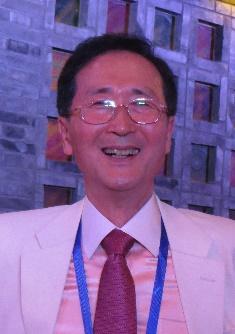
Yeomin Yoon Professor Emeritus, Seton Hall University Opinion Columnist, Diaspora


Leave a comment